We've read about the importance of critical literacy in the classroom, but the reading "Traveling, Textual Authority, and Transformation" by Avila and Pandya from this week is one of the few that focus on the digital aspect of critical literacy.
Obviously, technology is a major factor in society today and it's only going to increase in the future. Nowadays, children grow up using technology almost everyday. Because of this, it would make sense to incorporate it into their educational lives.
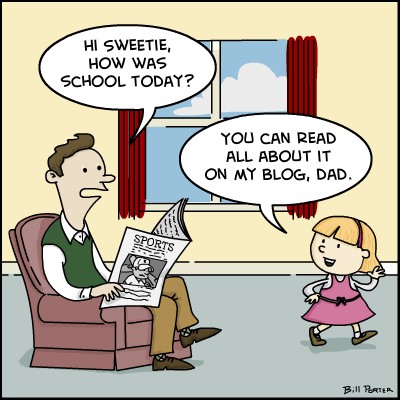
In the 4th grade classroom I'm currently in, each student has a Chromebook with which they do research, use educational websites, watch educational videos, take quizzes/tests, and write essays among other things. I can see how beneficial it is to have that technology as a resource. The students and teachers are able to get their work done more efficiently, the students have access to more information, and the students are able to learn the content in a way that is most beneficial to their learning style (e.g. visual, auditory, etc.). The students seem to be much more engaged in the content when it is given to them on the Chromebook. The activities they do on it are much more enjoyable and interactive than those done in workbooks/textbooks.
I'm curious as to what your opinions on digital literacy are:
Do you think digital literacy is more/less important than traditional print literacy? Or are they equally important?
When should digital literacy be introduced into a curriculum (elementary school, middle school, high school)?
What experiences have you had (in fieldwork or your own education) with digital literacy?
For those visual learners like me, here's a graphic representing the use of technology in schools.
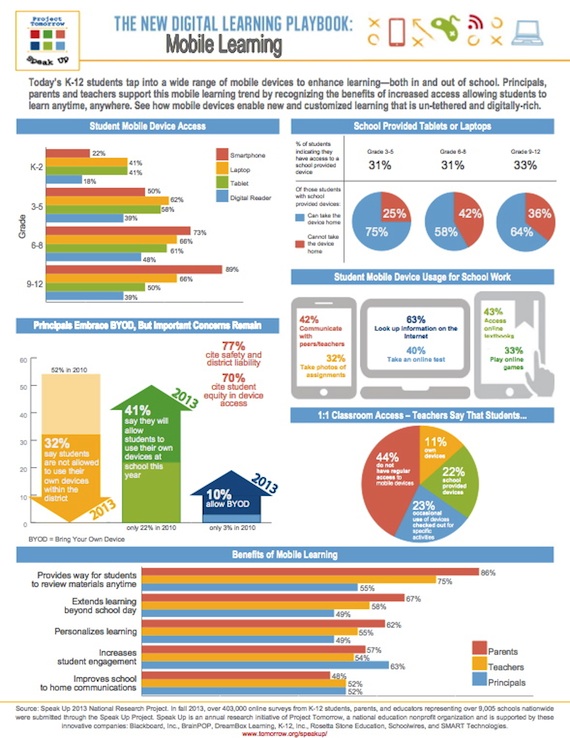 |
link to where this graphic is from:
https://thejournal.com/articles/2014/04/08/a-third-of-secondary-students-use-school-issued-mobile-devices.aspx
|

Hi Amanda!
ReplyDeleteI thought it was really interesting that you brought up the deficit vs. resource ideology. I think that since technology is such a big part in our students' lives it makes so much sense to bring it into the classroom. However, I do not think that it should be a incorporated into everything. What about the kids that don't have technological resources at home? They might not know how to use these resources as well as other students. Also, I feel as though the technology is almost replacing the teacher. I think that the technology is a great resource to use to reinforce the lessons that the kids are being taught, but that it should stay as just that.
See you tomorrow!
Hi Desirae!
DeleteI definitely understand the points you're making. It is very likely that the students won't have access to a computer/tablet/etc. at home and this should be taken into account when planning lessons. In my experience, most teachers use technology for in class assignments and rarely require the students to work on those assignments at home. I think the point you made about the technology replacing the teacher is interesting. I can see how it would require less instruction by the teacher, but it also allows for every student to have their own "teacher" right in front of them. If a student is struggling with an assignment and the teacher is busy working with another student, they can use their computer as a resource to help them answer their question.
This comment has been removed by the author.
ReplyDeleteHi Amanda,
ReplyDeleteI don't think it's any less or any more important. To some, digital literacy may be more important to them because they become more engaged through technology, for others, it's easier to concentrate through traditional print. Digital literacy should definitely be introduced to kids at a young age because it's something that's growing. The students have not used any form of digital yet, accept to take NWEA. So, that's my experience. lol.
Thanks,
Besan Ayman Mohammad
Hi Besan!
DeleteI completely agree with you that literacy should incorporate both print and digital literacies. It kind of goes along with the differentiated instruction we've talked about a million times. Not every student learns the same way, so having a variety of tools for them to use to complete an assignment is important. It's also true that a lot of students are only familiar with using technology for standardized tests. If that's the case, then implementing technology in other aspects of instruction wouldn't be as valuable as if the students are used to using technology everyday.
Hi Amanda!
ReplyDeleteI think that both of them are equally important. I know that the technology aspect is usually more engaging; however, I think that it can become a distraction. The traditional print allows them to focus on their work. In our society now, technology plays a huge role in our lives. I do believe that you have to be able to incorporate it into the classroom in a healthy manner. You do not want it to take over the class. When it comes to bringing digital literacy in the classroom I think the sooner the better. They will gain the background knowledge on it and be able to grow a deeper understanding as time goes on. I have only had one teacher that brought digital literacy into the classroom, but I noticed that some kids took advantage of it and tried to look up things that they were not supposed to be looking at.
Thank you!!
Tina Skukan
Hey Amanda,
ReplyDeleteI very much like the quote you used that states, "Avila and Pandya argue that "critical digital literacies have the potential to reach learners who might be otherwise reluctant to engage in print-based critical literacies work" (3). "
I have seen the digital literacies used in classroom and they essentially turn learning to read to a mini game where the kds get badges and I've seen kids get excited to be "on the next level" but they're really just improving their reading skills. I have however seen kids cheat the system where they give each other the tablets or computers and another classmate takes their assessment. I guess my question is how do we ensure that that doesn't keep on happening?
Hi Amanda!
ReplyDeleteSince our society is relying heavily on technology, I will have to say both digital literacy and traditional print are equally important. I feel that if teacher go with the traditional print, it will ensure that kids are actually paying attention to the lesson. On top, it is easier for teachers to see which students are off track. On the other hand, with digital literacy, it is a lot more engaging and interactive to the students, but I have seen students using this time to visit other sites that they are not supposed to. Usually when this happens, teachers can't really tell since all their students are LOOKING at the devices like they are supposed to. Overall, I think there are both pros and cons with each of the choices, so I would have to say as long as we are able to keep the lesson engaging to the students, it shouldn't matter what types of media we use to teach them.
I don't think digital literacy is more or less important than traditional literacy. I think each way of teaching has it pros and cons. You mentioned a few very good pros about having a computer with each student. They can surf the web for interactive activities and be interested in the lesson more than working with paper and pencil. However, many students (from my experience) always take advantage of the teacher not watching and go on websites they are not supposed to be on. If the teacher can come up with a strategy for the students to stay focused and learn effectively using computers, then technology would be a great source! otherwise, many interactive activities can be done using traditional teaching styles with papers and pencils (group work, projects, presentations).
ReplyDeleteIn my experiences, one major problem that makes me want to have a technology free classroom is the maintenance and cost of the laptops or computers. While setting up each student with a computer, many problems can occur like computers freezing, forgotten passwords, accessibility to internet, etc. It took a while for the teacher to get around to all the students and fix their problems, that by the time she got to the last student and helped fix his computer, the class was finished with the activity.
So having technology in the class can help the students be more involved, but it would take a lot of work and effort to make sure all computers are functioning and all students are handling them responsibly.
Hello Hello Amanda,
ReplyDeleteI like the pictures in the post! Very colorful and a nice visual. I think that yes digital literacy is much more portable and accessible for this generation. But the distractions of digital texts can play a big part when it comes down to that, because if someone is reading off the computer, they can hurt their eyes and also be wandering off into other sites that will not allow them to be reading and comprehending everything. I believe digital literacy should be introduced in the curriculum when they are in middle school because yes elementary school is nice and all, but they need to be able to understand everything and what it is that they are learning. I think that my own experiences consisted of students being distracted but also using the different programs to be able to focus on their work and see if they are able to understand the work that is given to them.